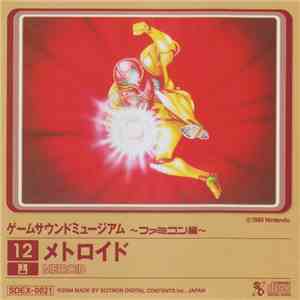
Hirokazu Tanaka - Game Sound Museum ~Famicom Edition~ 12 Metroid

Hirokazu Tanaka - Game Sound Museum ~Famicom Edition~ 12 Metroid mp3 download flac

Performer: Hirokazu Tanaka
Genre: Electronic, Stage & Screen
Album: Game Sound Museum ~Famicom Edition~ 12 Metroid
Released: 2004
Style: Chiptune, Soundtrack

Free Download links

Mp3 zip archive download FLAC RAR archive download WMA Rar archive download
MP3 version ZIP size: 1626 mb
FLAC version RAR size: 1137 mb
WMA version ZIP size: 1103 mb
Rating: 4.2
Votes: 563
Other Formats: FLAC ASF MMF VQF VOC RA DXD

Tracklist

1 タイトル BGM 1:48
2 サムス登場ジングル 0:07
3 ブリンスタ (岩ステージ) 1:47
4 小ボス部屋 (I) ~クレイド 1:44
5 ノルフェア (炎ステージ) 1:25
6 小ボス部屋 (II) ~リドリー 1:05
7 静寂 0:58
8 アイテム取得ジングル 0:06
9 ツーリアン (基地ステージ) 0:43
10 ゼーベタイト 0:36
11 脱出 1:15
12 エンディング 2:17
13 ゲームプレイ 2:32

Companies, etc.

  • Phonographic Copyright (p) – Scitron Digital Contents Inc.
  • Made By – Scitron Digital Contents Inc.
  • Copyright (c) – Nintendo

Credits

  • Composed By – Hirokazu Tanaka

Notes

English Translated Tracklist:

1. Title BGM
2. Samus Appearance Jingle
3. Brinstar (Rock Stage)
4. Small Boss Room (I) ~ Kraid
5. Norfair (Flame Stage)
6. Small Boss Room (II) ~ Ridley
7. Silence
8. Item Obtainment Jingle
9. Tourian (Base Stage)
10. Zebetite
11. Escape
12. Ending
13. Game Play

Barcode and Other Identifiers

  • Matrix / Runout: SDEX-0021 MT C01
  • Mastering SID Code: IFPI L263
  • Mould SID Code: IFPI 4480
Comments:
Fohuginn
Mario, Zelda and Metroid. While Nintendo has added to their magazine of franchises over the years with hits like Kirby, Star Fox, Pikmin and most recently Spltaoon!, one would be hard pressed to find a gamer who hasn’t been grazed by a game from that triumphant trio. Mario was the quirky side-scroller, Zelda was the top-down dungeon crawler and Metroid was the sobering, alien extermination simulator. Beloved as each franchise is in its own right, the only one that ever gained serious traction with me was Metroid. Of course, this doesn’t mean I’m immune to the tasty charms of personal favorites like Super Mario World and A Link to the Past, but where my experience with other Mario and Zelda games is limited due to due to other developer’s games stealing the spotlight I’ve always made time to experience each game in the Metroid saga. Unfortunately, the reason behind this love – its dry sense of seriousness versus the lightheaded nature of most Nintendo fare – isn’t a becoming point of view. I understand why fans react negatively to the childish labels placed upon Nintendo’s output, but at the same time I can’t candy coat what draws me to these games.My introduction to the Metroid franchise was haphazard at best. Originally obtaining Metroid II through a Cool-Aid point exchange program of all things, I initially had a lot of trouble making headway in Return of Samus. I’m not sure if I was too young to grasp the game at the time but once those barriers were broken down all I wanted was more Metroid. Luckily by that point Super Metroid was on store shelves. Like most, this superb sequel left me speechless yet there was a part of me that I couldn’t fully appreciate it without experiencing the original. Unsurprisingly, there was another big lull in the action until I made a friends with someone who owned the NES cart. As I suspected, playing the game gave me the context I had been clamoring for but little did I know that experience would be up for debate a decade later. While the impact of the game wasn’t as sweeping as it could have been because I played the games out of order, Metroid seemed fine to the young teenager I was at that point. Fast forward to current times and you’ll see all sorts of mud being flung at it. So what happened?Unlike its two immediate successors, Metroid aged and it aged poorly. However, there’s a line between aging poorly and becoming worthless that a lot of people tend to ignore. I can’t even begin to deny the game’s aged in some unflattering respects, but I can’t help but feel some are spewing hyperbolic vitriol when they say the Game Boy Advance Classic NES Series release has no value. Yes, the game does get away with a lot now because of its namesake, but failing to recognize its importance in the scheme of things (for the franchise and for games in general) is beyond foolish. Almost everything about the first game influenced the ones that followed and unlike the original Mega Man I refuse to view Metroid as an obsolete stepping stone. But this begs the question: if the solidarity of Metroid’s gameplay has come under fire are there any elements that are worthy of continued praise?Given the product this review is focused on, my answer to this question is probably clear as day. Despite its age, the sound design of the original Metroid still has a lot to impart. However, is it what the average listener can gain from this score that’s important or what composers like Kenji Yamamoto and Minako Hamano seemingly took from this resource? Even with a cursory glance you can see how Hirokazu Tanaka’s work on the series debut helped forge what was penned for Super Metroid. This doesn’t make one body of work better than the other (in my opinion) but idea of Yamamoto and Hamano making Tanaka’s work a pivotal resource speaks volumes and solidifies its enduring legacy. But when one looks at what Tanaka set out to accomplish with the Metroid soundtrack verses the actual results I don’t believe he carried out his convictions to the letter.When composing the soundtrack for Metroid, Tanaka didn’t want the music to be overly melodic and/or hummable; he wanted there to be no real distinction between the game’s music and sound effects. The goal was to make players feel as if they just entered a living organism. While delivering on the last point – Metroid’s soundtrack certainly feels organic any way you slice it – I don’t believe Tanaka succeeded with the first two points. Some tracks are more melodic than those reading without knowledge of the music might expect. However, to his credit, his ambitions do become truer the further one progresses in the game.Just as interesting as Metroid’s musical influence is the score’s history on physical media. Originally released on 1994’s Super Metroid: Sound in Action, nothing is ever going to change my opinion that Sound in Action is horrifically flawed and unworthy of the price it demands. Point blank, no one should purchase Sound in Action to obtain access to Hip Tanaka’s music. Recorded live from the actual game for some reason, this is an insipidly poor rendition of the score; the rouge sound effects in the tracks painfully illustrate the lazy procedures used to produce this section of the album. Those with an interest for a much cleaner experience should check out the later renditions produced Scitron Digital Contents in 2004. Being one of the various scores included on Famicom 20th Anniversary Original Sound Tracks Vol.1 (SCDC-00317) I eventually replaced it with this album, Game Sound Museum ~Famicom Edition~ 12 Metroid (SDEX-0021) which contains the exact same recording minus the additional scores. While having the soundtracks for Super Mario Bros., The Legend of Zelda and Kid Icarus was nice, there was a part of me that had to admit that it was Hip Tanaka’s work on Metroid I was really after. The silly compulsion of not wanting to clog up my music library aside, the only difference between the recordings on the two Scitron releases is the Game Sound Museum mini disc has an additional track (track 13) containing some live gameplay. It’s as pointless as you’d expect.Kicking off with the game’s iconic title theme, “Title BGM” (track 1) presents the listener with the only real change from what they heard in the game. Possibly unbeknownst to those that live outside of Japan, Metroid was released on the Famicom Disk System in its homeland, not the cartridge-based Famicom. The Famicom Disc System included additional channels for sound thus there’s some changes with the instruments. This rendition of the game’s title theme has a deeper bass line than normal. Given that I grew up with the NES rendition my displeasure of this variation is no surprise. I can’t say it bothers me to the point of derailing the opening of the disc, but it certainly dilutes my desire to listen to it. Disappointing as that may be, the effectiveness of Metroid’s main theme is also challenged by its successors. While I enjoy the theme, I think my interest in it is based more on respect than love. When you look at the main themes for Super Metroid and Metroid Prime, the polarity of these concepts are reversed in those cases. While respecting a piece of music for its quality is important, being able to embrace that piece of music in the moment without immediately dissecting it based on quality is as well. Things aren’t as black and white as this explanation is making it out to be, but the thing to take away from this is there’s a lot of competition when it comes to the main themes that have graced the the games in the franchise.“Samus Appearance Jingle” (track 02) and “Item Acquired Jingle” (track 08) introduce us to two series hallmarks that everybody knows and loves yet represent one of the more conflicted aspects of the soundtrack. I don’t think anyone can argue against the effectiveness of these jingles considering they’ve appeared in nearly every Metroid game developed (save for Metroid II) but on the NES these tracks point out the rougher patches when it comes to sample and instrument choice. While I can’t quite condemn them, both tracks underwhelm me with how unpolished they sound, making them the most uninspired versions in existence. Again, I don’t believe this is a result of the NES’s sound limitations because none of the remaining themes are hindered in such a fashion. Had the game’s sound programmer fiddled with the samples used in these pieces a little more we’d probably be reflecting back on more memorable renditions.After “Samus Appearance Jingle” the player is introduced to “Brinstar (Rock Stage)” (track 3), one of the first pieces employed in the game. An appropriately encouraging piece, I can’t help but feel the first Brinstar theme flies in the face of Tanaka’s ambitions. For a soundtrack that’s trying to minimize the divide between music and sound effects this is just way too melodic. Granted, such a qualm will only be an issue for those that have researched the development of the soundtrack (and personally I’m not overly concerned if Tanaka breaks the score’s guiding principles when the results are this good) but the lack of adherence has to be noted. Tanaka does inch away from smooth melodies with the second Brinstar theme “Small Boss Room I ~ Kraid” (track 4). One of the most defining pieces in the entire score, I can’t even begin to explain how important this track is to me. Back when I first played Metroid in the seventh grade my music class was in the middle of a lesson on classical music. One of the pieces my instructor would play was a Bach piece performed by E. Power Biggs titled “Fugue, The Little, BWV 578.” Those unfamiliar with this particular Bach piece (which was cleverly employed in Mega Man Legends by composer Makoto Tomozawa) may be wondering what the connection between these two compositions is. Well, it’s simple. Both numbers are draped in the gloom and doom of a domineering organ performance. Can you imagine my surprise when I ran into a classical piece of music that reminded me of a recently discovered video game track? I was ecstatic. I loved the sense of connection (that occurred out of dumb freaking luck) and could only wonder if composers like Bach influenced Tanaka’s when developing this soul-piercing number.Deconstructing the idea of melody even further are “Norfair (Flame Stage)” (track 5), “Silence” (track 7) and “Small Boss Room II ~ Ridley” (track 6). Much more sporadic in nature than its earlier, Brinstar based counterpart, “Norfair (Flame Stage)” is one of those tracks you know you should enjoy more than you do; every soundtrack in existence seems to have one of these suckers on principal. Yamamoto’s Norfair themes from Super Metroid probably get a lot more attention than Tanaka’s; however, the theme that accompanies this area in the original game is designed to be more methodic and lazy; more of a spectator to the action than a main driving force. Similar in nature is the Chozo item room theme “Silence.” Another key piece on the soundtrack, it’s structured similarly to the prior Norfair theme only this track has a lot more history as it appears to be the basis behind Super Metroid’s “Ancient Chozo Relic Chamber.” Listening to both tracks I can’t help but feel that the creation of the first track lead to the creation of the second years later. Being another one of my favorites, my co-workers often catch me whistling this devilishly simplistic number at work. Rounding out the tracks in the soundtrack’s second level of melodic deconstruction is the unfortunate “Small Boss Room II ~ Ridley.” For as long as I can recall I’ve never felt the slightest bit of warmth towards this one. More reminiscent of a repeating sound effect (e.g. alarm) than a song, I can’t even begin to consider this to be a fully formed idea. While appropriately teasing the listener like Ridley’s lair does from a gameplay perspective, it could have been so much more.With the final level of abstract stage themes we have “Tourian (Base Stage)” (track 9) and “Zebetite” (track 10). This dynamic duo features the most brazen examples of Tanaka’s musical vision. There’s really nothing that stops one from considering “Tourian (Base Stage)” to be a random string of alien sounding sound effects and the same can be said of “Zebetite.” Curiously, “Zebetite” feels as if it was the basis of Minako Hamano’s Tourian theme in Super Metroid. The inconclusive links aside, these tracks and my general indifference towards them makes me thankful that Tanaka’s underlying aspirations for the soundtrack weren’t religiously adhered to. If all the area themes would have been this nonfigurative my interest in the soundtrack would be greatly diminished.Last but not least we have “Escape” (track 11) and “Ending” (track 12) that close out Samus Aran’s first recorded adventure. “Escape” is a track that has a surprisingly deep history. Considered by some to be the only piece in the score that plays during gameplay to have a melody, the reason this train of thought exists is because the track is intended to give the player a sense of catharsis upon beating the game’s final boss. Considering what I’ve said about melody prior to this (e.g. “Brinstar [Rock Stage]”) I disagree with this point of view. “Escape” was also incorporated into the conclusion of 2004’s Metroid Prime 2, although the reprise only reinforced my opinion that the piece isn’t as strong as some believe and Kenji Yamamoto is in complete denial about the viability of reprises. “Ending” pretty much ends up in the same boat as “Title BGM” in that it deserves more attention than it receives (myself being included in this demographic) but again it faces stiff competition from Super Metroid’s credits theme which is one of my favorite closing pieces ever.In the end it’s somewhat difficult to sum up what needs what needs to be said about the Metroid soundtrack. While it wasn’t as instrumental in getting me into video game music like the score for Mega Man 2 was, there’s no denying that it’s important in the larger sense. But again, in what way is it important? I don’t think one can form their own point of view from my ramblings above, but from a personal standpoint I can’t agree with Tanaka’s work being a mere step in evolution. However, I wouldn’t be surprised if this was the extent of its value to some. Worth truly is in the eyes of the beholder but despite some of its bigger faults it’s more than a footnote to me. While its successors may be more popular, I can’t help but recommend those interested in exploring Metroid’s deep and rich musical history to check this one out. The game’s aged but there’s plenty to be learned here.

Performer: Konami Kukeiha Club
Genre: Stage & Screen
Album: Konami Music Masterpiece Collection [コナミミュージック 名曲コレクション]
Released: 2004
Style: Soundtrack
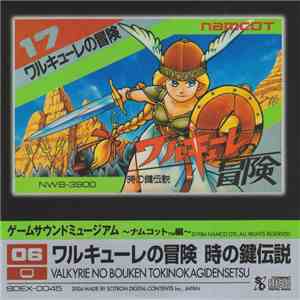
Performer: Hiroyuki Kawada
Genre: Electronic, Stage & Screen
Album: ゲームサウンドミュージアム ~ナムコット編~ 06 ワルキューレの冒険 時の鍵伝説
Released: 2004
Style: Chiptune, Soundtrack
Performer: Saber Tiger
Genre: Rock, Stage & Screen
Album: Halos And Glare - The Complete Trilogy
Released: 2018
Style: Heavy Metal, Progressive Metal, Power Metal
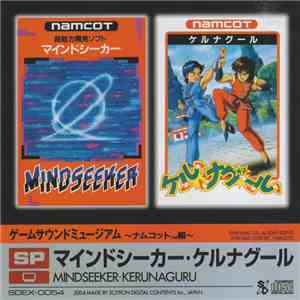
Performer: Nobuyuki Ohnogi
Genre: Electronic, Stage & Screen
Album: ゲームサウンドミュージアム ~ナムコット編~ SP マインドシーカー・ケルナグール
Released: 2004
Style: Chiptune, Soundtrack
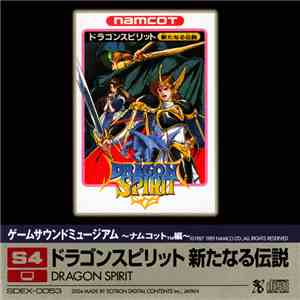
Performer: Various
Genre: Electronic, Stage & Screen
Album: ゲームサウンドミュージアム ~ナムコット編~ S4 ドラゴンスピリット 新たなる伝説
Released: 2004
Style: Chiptune, Soundtrack

Performer: 菅野祐悟
Genre: Classical, Stage & Screen
Album: Nioh Complete Edition The Original Mini Sound Track CD
Released: 2017
Style: Soundtrack
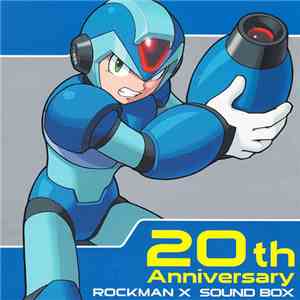
Performer: Various
Genre: Electronic
Album: 20th Anniversary Rockman X Sound Box
Released: 2013
Style: Chiptune
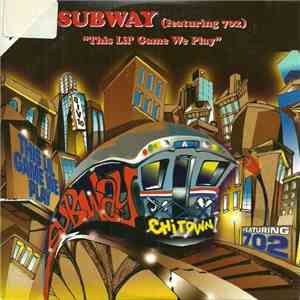
Performer: Subway
Genre: Hip hop, Funk / Soul
Album: This Lil' Game We Play
Released: 1994
Style: RnB/Swing
Performer: Various
Genre: Electronic, Stage & Screen
Album: Famicom Music
Released: 1986
Style: Chiptune
Performer: Eddie You
Genre: Electronic
Album: Dodonpachi II / Dodonpachi Sound Trax
Released: 2001
Style: Techno, Trance, Drum n Bass